
History of Mexican Immigration to Wisconsin









1886
The First Known Mexican Immigrant to the State
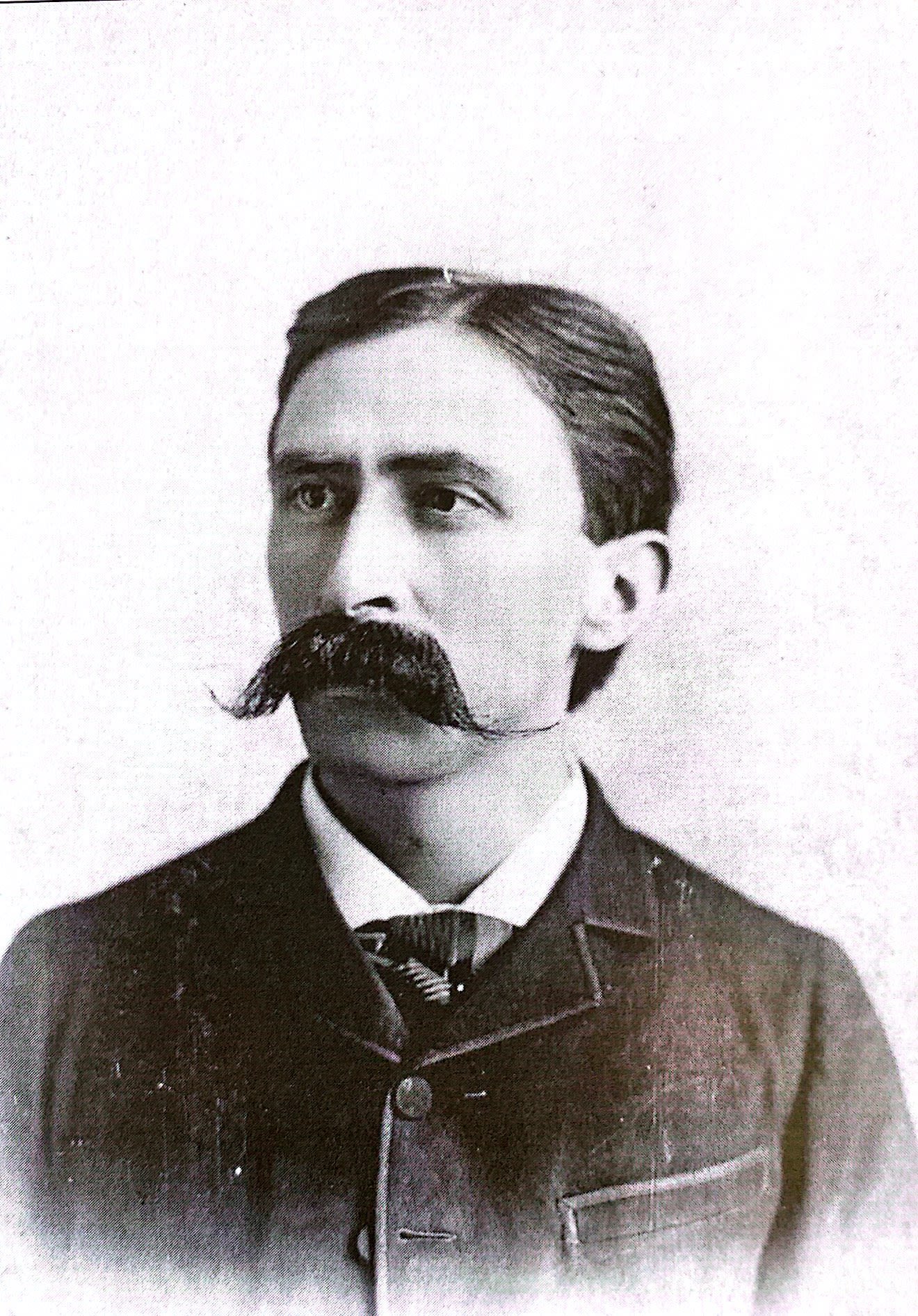
In 1884, Rafael Baez, a prominent musician in Puebla, Mexico, toured the U.S with the C.D. Hess Opera Company after their tour in Mexico. When the tour ended in 1886, Baez settled in Milwaukee where he advanced his musical career as an organist and musical director for several churches, and later became a music teacher at Marquette College. He was the college's first Mexican faculty member and one of the most sought-after music teachers in the city. Wisconsin locals accepted Baez into the community and welcomed him to participate in civic and political activities, making Baez's experience as a newly arrived Mexican immigrant to Wisconsin distinctively different than those who came after him.
Image: Rafael Baez. Source: Sergio Gonzalez, Mexicans in Wisconsin
1910s-1920s
Coming to Work
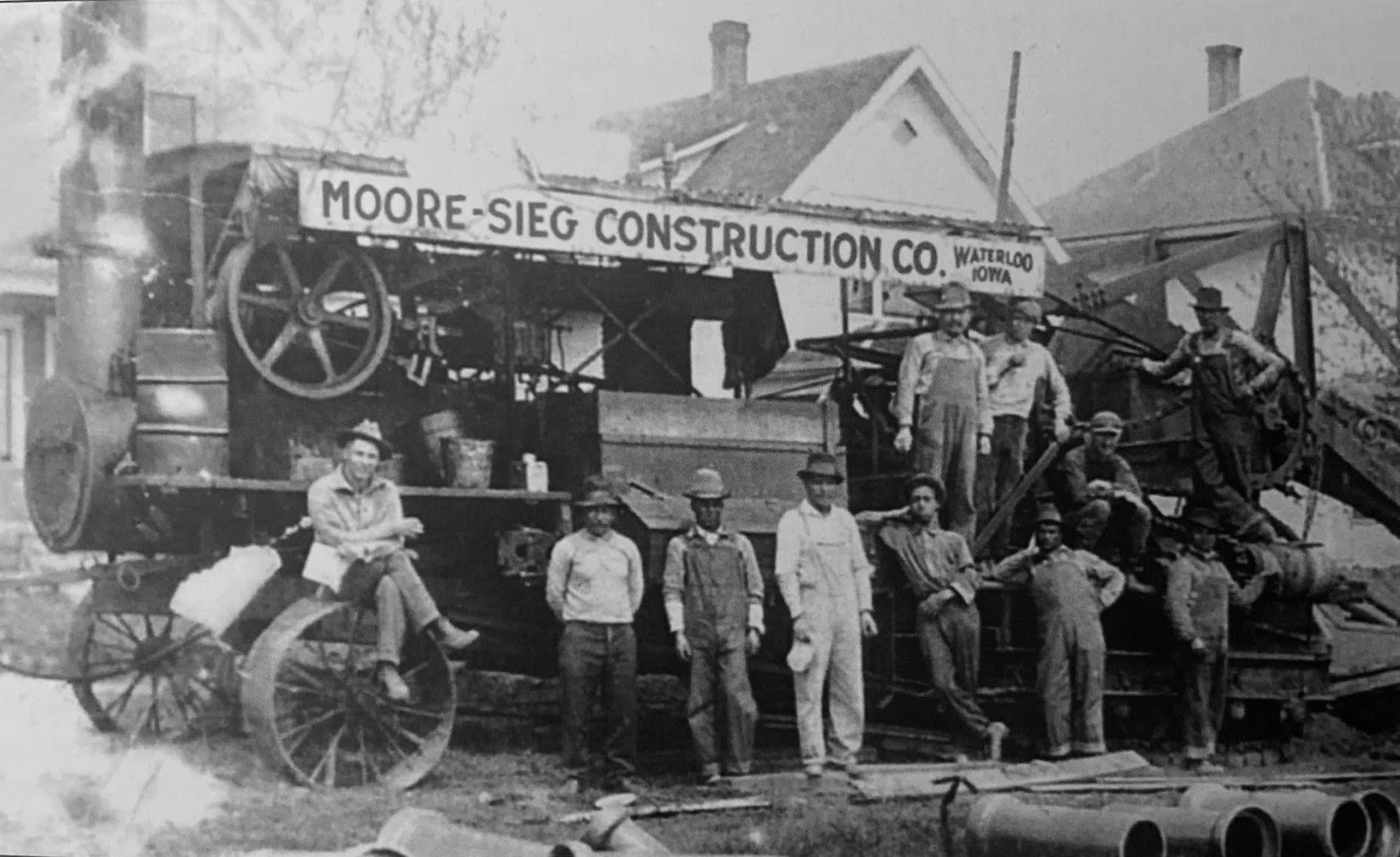
During the 1910s and 1920s, many single Mexican men came to the state looking for work. For most, Wisconsin was not their first destination. They followed railroad work to the state or came because they had heard of employers looking for workers. Some sent money home with the intention of returning to Mexico. Others married women of European descent or had come with their wives from Mexico and began to settle down in urban neighborhoods in cities like Milwaukee and Waukesha.
Image: (First row, third from right) Primo Melendes, (fourth from right) Joseph Melendes, (fifth from right) Leonardo Banda heading North from Iowa to Wisconsin with the Moore-Sieg company in the 1920s. Source: Latinos in Waukesha.
1930s
Building a Home Away From Home
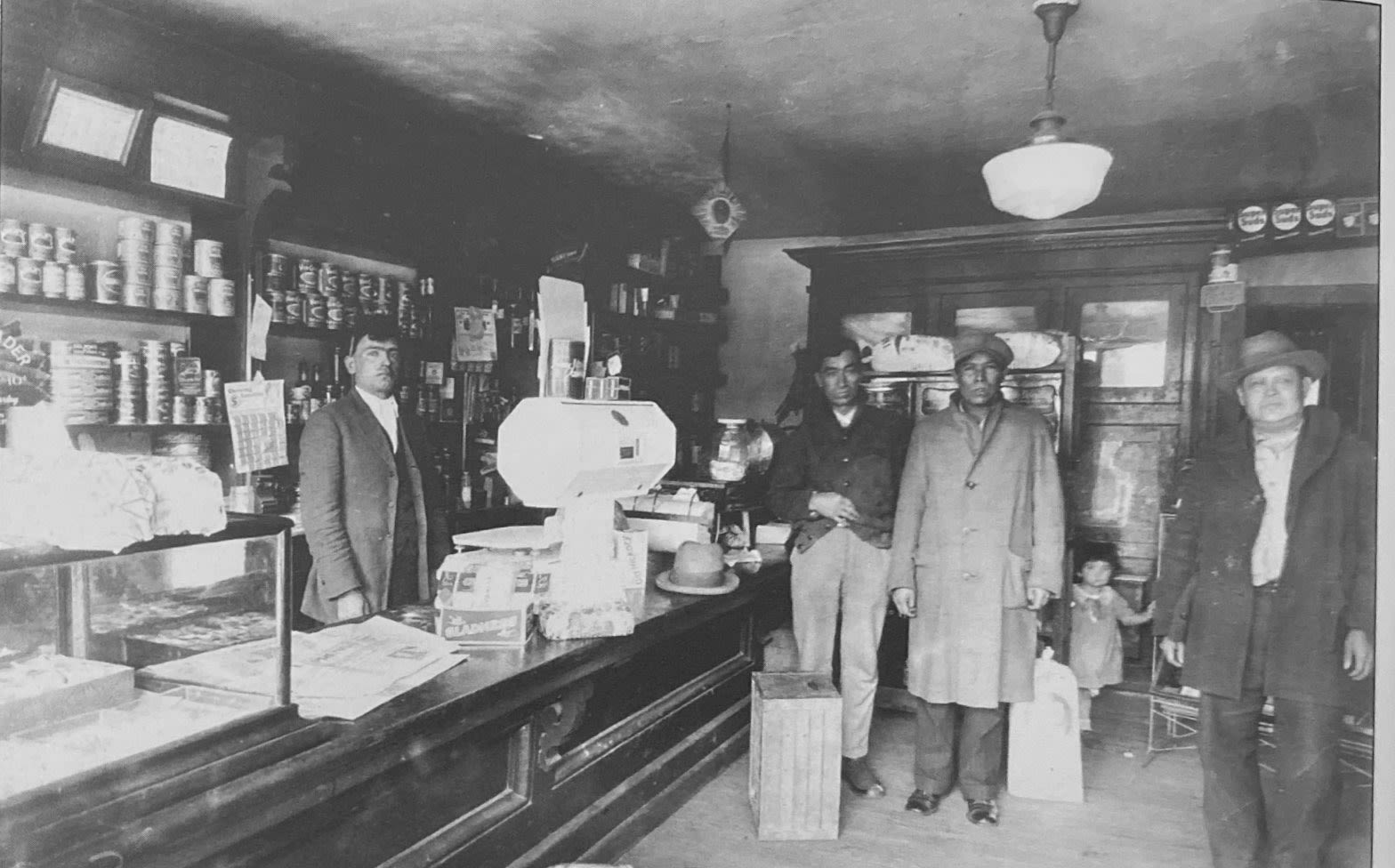
As Mexican immigration was increasing by the 1930s, many immigrants that came in the previous two decades—known as Los Primeros or those who came first—had begun building communities and businesses. Many opened their homes and kitchens to newly arrived immigrants. Additionally, those who had opened their own grocery stores acted as banks and post offices to help recent arrivals navigate the new country and send money to their families in Mexico. Several of the neighborhoods where los primeros settled in the early 1900s continue to be called home by Latino communities today.
Image: Luciano Haro (behind the counter), a 30 year old immigrant from Mexico posing with customers of his Milwaukee grocery store in 1931. Source: Latinos in Milwaukee.
1940's
Aiding the Otherside of the Border
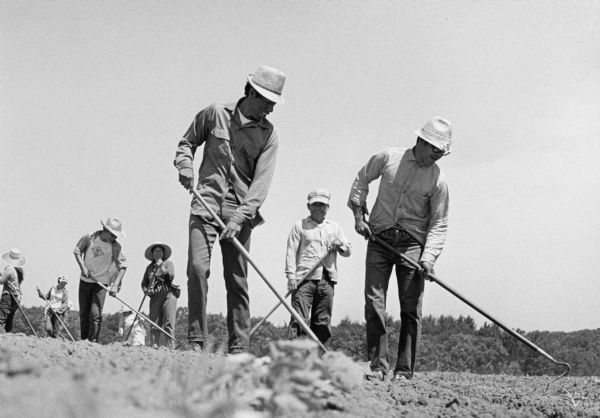
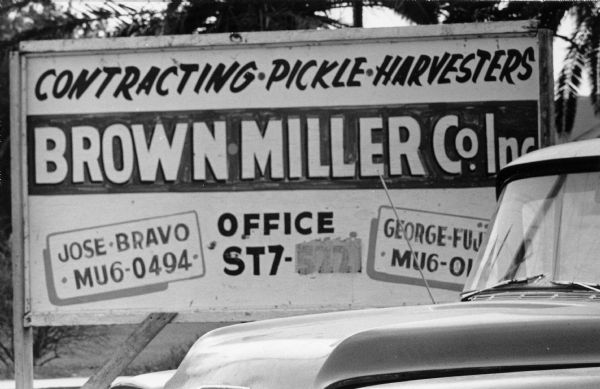
As thousands of able bodied men were fighting overseas in World War II, employers in Wisconsin found themselves without a strong workforce to meet the demands of the war effort. In 1942, in desperate need of help, the U.S negotiated with Mexico to send thousands of Mexican men to work for US employers on temporary contracts. This negotiation is commonly known as the Bracero Program. Hundreds of Braceros came to Wisconsin throughout the program until its termination in 1964. They worked primarily in fields and factories throughout central and southern parts of the state. However, most Braceros worked and were housed in terrible conditions that continued for other Latinos in the following decades.
Image: Workers cultivating a cucumber field with hoes. Source: The Wisconsin Historical Society
1950s
"We Didn't Cross the Border, the Border Crossed Us"
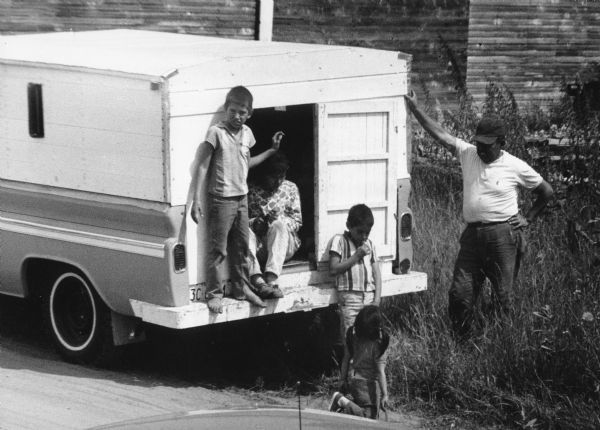
During the 1950's, Texan families of Mexican descent—also known as Tejanos—started coming to Wisconsin in large numbers to work in the fields. Many Tejanos have been quoted saying that they did not cross the border but rather the border crossed them, as Texas was once a part of Mexico. Wautoma was just one of the many counties Tejanos worked in picking cucumbers and sugar beets for canning companies. For most Tejanos, Wisconsin was one stop in many harvest seasons throughout the Midwest where they worked long days doing manual labor.
Image: A family from Texas, came to work in Waushara County, stand by their truck parked outside of their temporary home. Source: The Wisconsin Historical Society.
1960s
Claiming Space and Demanding Rights
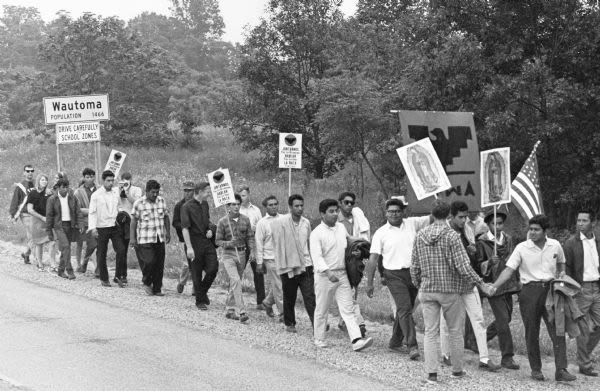
When the Bracero program was terminated in 1964, there were more Tejanos working in the state than Braceros. Both groups, and other Mexican immigrants before them, experienced terrible working and living conditions, discrimination, and low wages. In 1966, a group of around 30 migrant workers led by Jesus Salas—a former migrant worker himself—marched approximately 80 miles from Wautoma to Madison to fight against violations of minimum wage and housing laws by employers.
After the march, an agricultural labor union, Obreros Unidos (Workers United) was created and led by Salas. Obreros Unidos organized several walk-outs, boycotts, and protests throughout the next two decades. The group demanded respect, higher wages, better working and living conditions, and proper services for migrant families. Though their fight for better treatment angered many employers, they nonetheless made progress.
Image: Marchers of the later known Obreros Unidos Union leaving Wautoma on Highway 21 to Madison. Source: The Wisconsin Historical Society.
1970s
From Rural Roads to Urban Homes
In the 1970s, more and more Latinos began to speak up against various issues such as discrimination in places of education and employment, lack of proper healthcare, and poor housing. Many Wisconsin employers, especially canners, were angered by Latino activism and migrant workers' demands for better conditions because it forced employers to take responsibility for those workers and their wellbeing rather than have a disposable low-cost and low maintenance workforce. Some even blamed the rapid growth of mechanization in the fields replacing migrant labor which led to unstable work—and therefore an unstable workforce—on Obreros Unidos. As a result of the growth of mechanization, many Latino workers moved to find more stable work in Urban areas where many continued fighting for respect and better treatment as the Latino population in Wisconsin continued to grow and speak up.
1980s
In Search of a Better Future
Immigration from Mexico to the US increased significantly in the 1980s due to many factors, one being a series of economic crises that left many people in Mexico jobless. In addition, many Central Americans were forced to seek refuge in the US, fleeing the violence and instability brought on by U.S.-backed civil wars and military governments.
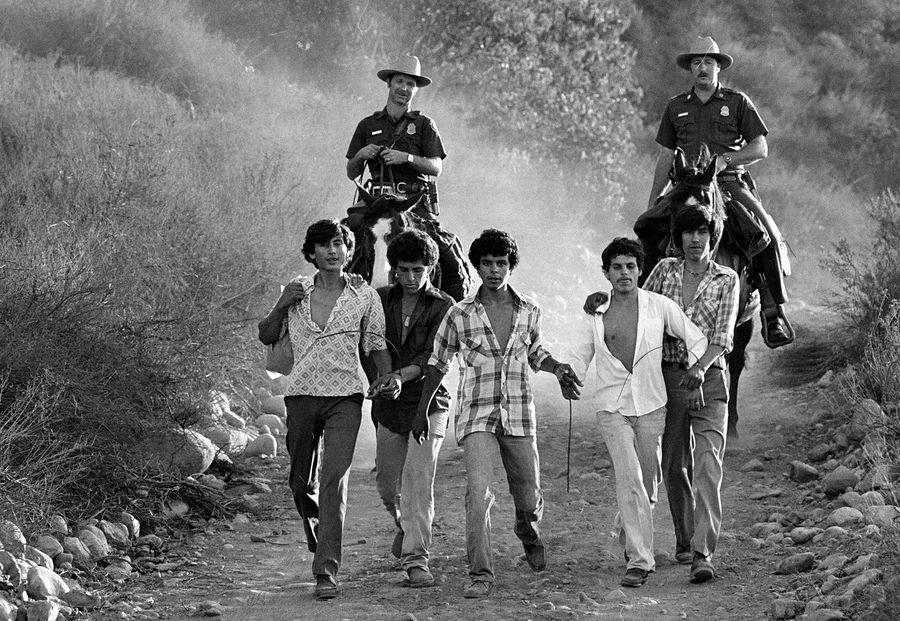
Looking for a way to provide for their families, some Mexicans decided to head north and send money home. However, getting a proper visa was not easy, so many came "sin papeles" or without papers. On top of the economic crises in Mexico, employers in Wisconsin were heavily recruiting Mexicans to work—either through legal or extralegal means— in factories, canneries, fields, tanneries, and meat processing plants all of which were low paying manual labor jobs. Several studies showed that undocumented workers were working longer hours for less pay than American citizens in similar jobs, but were still paying more in taxes. Though they were able to send money home, undocumented immigrants were in constant fear of being deported and faced immense discrimination on both a state and national level.
1990s-2010s
Making the Dairy State
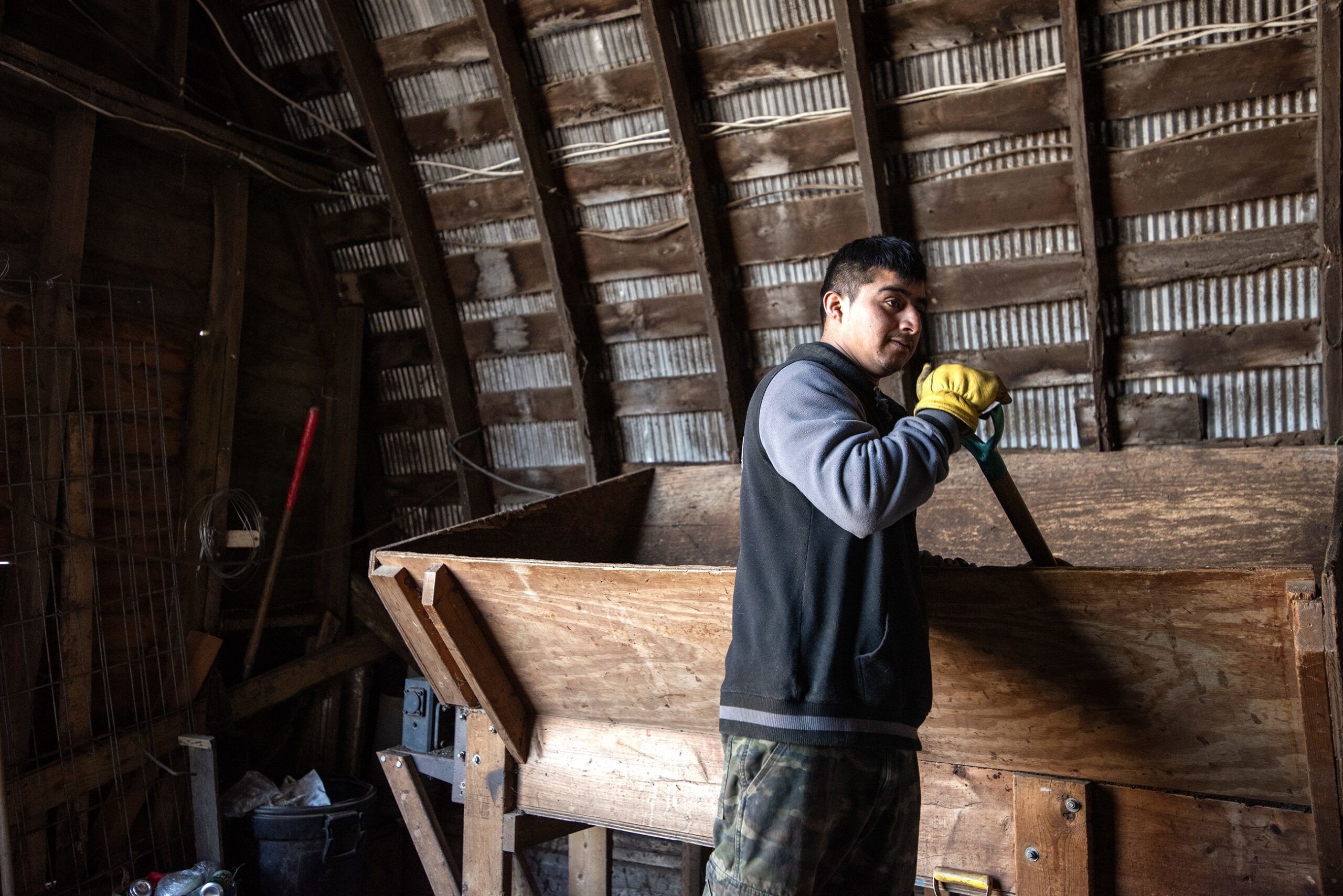
Since the 1990s, Wisconsin dairy farmers have relied heavily on Mexican and Central American immigrant labor for the survival of their farms. Especially after the enactment of the North American Free Trade Agreement (NAFTA), corporate dairy farms began to take over Wisconsin farmlands leaving smaller dairy farms with the choice to shut down, switch to farming crops, or expand to be able to make a profit. This hurt many generational farms. Though Wisconsin has taken pride in being "America's Dairyland," it has lost almost half of its dairy farms.
NAFTA also had harmful affects for Mexican farmers and workers who were unable to compete with the increase of subsidized U.S corn. The result was devastating. Mexico lost over 900,000 farming jobs during the first ten years of NAFTA. The farm crisis on both sides of the border led to a higher demand for immigrant labor in the US, and a need for better economic opportunities for many Mexicans.
Today, several experts and dairy farmers agree that the dairy industry in the midwest would collapse without immigrant workers, who are largely coming from Mexico and Central America.
 Built with Shorthand